

Vintage Hockey Shirts: Collector's Guide for Fans
The fastest path to a great vintage hockey shirt depends on one question: are you collecting or wearing? Buy authentic vintage from a specialty shop or vetted marketplace when provenance and rarity matter. Choose Puckfuel’s vintage-inspired shirts when you want retro style every day without the fragility or sizing guesswork.
Before you click anything, check these seller types first:
- Specialty vintage shops — curated inventory, higher trust, transparent pricing
- Online marketplaces — broad selection, variable seller quality
- Auction houses — best for rare, high-value collectible hockey shirts
- Private sellers — potential bargains, but higher risk
- Reissue and vintage-inspired brands like Puckfuel — consistent sizing, returns, everyday durability
Immediate trust signals to verify before buying:
- Close-up photos of tags, stitching, and patches
- Full chest, length, and shoulder measurements listed
- Clear return policy or buyer protection
- Seller feedback score and response history
Pro Tip: If a listing shows only one or two photos, message the seller and ask for clearance shots of the neck tag, hem stitching, and any patches before you bid or buy.
Table of Contents
- Where to buy vintage hockey shirts: seller types and what to expect
- How do you authenticate a vintage hockey shirt?
- Condition grades and U.S. price expectations
- How do vintage shirt sizes compare to modern sizing?
- How to care for and restore vintage hockey shirts
- How to style vintage hockey shirts without wrecking them
- Before you click buy: a pre-purchase checklist
- Key Takeaways
- The case for knowing what you actually want
- Puckfuel’s vintage-inspired collection is built for the rink and the street
Where to buy vintage hockey shirts: seller types and what to expect
Your buying channel shapes everything from price to risk. Specialty vintage shops offer curated old school hockey shirts with transparent condition notes and pricing you can benchmark. Specialty vintage retailers typically list retro hockey tees for $24–$28, sweatshirts for $31–$34, and hoodies up to $39.99, giving you a solid baseline for what fair market looks like.

Online marketplaces give you the widest selection, including defunct teams and minor-league clubs that rarely surface elsewhere. Large catalogs can span hundreds of vintage hockey designs organized by era, arena, and league, which makes targeted searching for a specific team or decade genuinely feasible. The tradeoff is variable seller quality, so you do more vetting work yourself.
Auction houses are the right move for rare, high-value pieces where documented provenance drives price. Private sellers can yield bargains, but they carry the most risk. Reissue and vintage-inspired brands sit at the opposite end of the risk spectrum: predictable sizing, clear return policies, and no authentication anxiety.
Pre-purchase checklist — request or verify all of these:
- High-resolution photos of the tag, stitching, patches, and any graphic cracks
- Full measurements: chest (pit-to-pit), body length, shoulder width, sleeve length
- Provenance or ownership history, especially for game-worn claims
- Accepted payment methods and buyer protection coverage
- Return policy terms and shipping estimate with insurance option
- Any known restoration work done to the shirt
Pro tip on search strategy: Category filters by era and venue on well-organized seller sites let you zero in on WHA-era or specific arena shirts without scrolling through hundreds of unrelated listings.
How do you authenticate a vintage hockey shirt?
Start with the tag. Manufacturer tags from the 1970s and 1980s use woven labels with era-specific brand names and country-of-origin text that reads differently from modern printed tags. Single-line care instructions printed directly on the fabric didn’t appear until the late 1980s, so a shirt claiming to be from 1975 with a printed care label is a red flag.
Move to the stitching. Chainstitch hems and single-needle construction are hallmarks of older garments. Double-needle hems became standard in mass production later, so their presence on a claimed early-era shirt warrants a closer look. Close-up photos of seams and patches are the single most useful authentication tool you can request from a seller.
Check the print and material. Older shirts use heavier cotton with plastisol or screen-print graphics. Cracking and fading in the print can indicate genuine age, but it can also mean a shirt was simply washed hard. Feel matters: authentic vintage fabric has a different hand than modern cotton blends.
Patches and appliqués deserve their own inspection. Sewn-on vintage patches show thread wear consistent with the shirt’s age. Modern heat-applied patches look flatter and lack that slight puckering around the edges that decades of washing create.
Red flags that should stop a purchase:
- Tags and graphics from mismatched eras
- Materials that feel too crisp and new for the claimed age
- Seller unwilling to share close-up photos or measurements
- Inconsistent brand placement compared with known examples from that period
Pro Tip: Ask for a 30–60 second video of the shirt laid flat under natural light. It reveals stitching texture, fabric drape, and print depth in ways that still photos simply cannot.
Condition grades and U.S. price expectations
Condition is the single biggest price driver after rarity. Here’s how the standard grading scale maps to value for U.S. buyers:
| Condition | Description | Typical U.S. Price Range | Best For |
|---|---|---|---|
| Mint | Near-new, no visible wear or fading | $24–$28 for tees, $31–$34 for sweatshirts, up to $39.99 for hoodies | Serious collectors |
| Very Good | Light wear, minor fading, all graphics intact | — | Collectors and wearers |
| Good | Visible wear, slight fading, no holes | — | Everyday wear, casual collectors |
| Fair | Major wear, holes, or prior repairs | — | Display, parts, or heavy restoration |
Rarity pushes prices well above these ranges. Shirts tied to defunct franchises like the Cleveland Barons or Toledo Goaldiggers command collector premiums because the supply is fixed and the demand from regional fans stays strong. WHA-era and early NHL logo designs carry similar premiums. A documented game-worn provenance can multiply value significantly beyond the condition grade alone.
Negotiation levers worth using:
- Documented provenance gaps (no receipts, no history) justify a lower offer
- Visible restoration work reduces collectible value and should lower price
- Shipping and insurance costs are often negotiable on higher-ticket pieces
- Return policy absence is a risk you should price into your offer
How do vintage shirt sizes compare to modern sizing?
Vintage sizing runs boxy and often shorter in the body than modern cuts. A shirt labeled “Large” from the 1980s may measure closer to a modern Medium in chest width and run an inch or two shorter in body length. Always collect measurements before buying.
Four measurement points to request:
- Chest (pit-to-pit): measure across the front from armhole seam to armhole seam; double for full chest
- Body length: from the highest point of the shoulder seam to the hem
- Shoulder width: seam to seam across the back
- Sleeve length: from shoulder seam to cuff
| Vintage Label | Pit-to-Pit (inches) | Body Length (inches) | Modern Equivalent |
|---|---|---|---|
| Small | — | — | XS–S |
| Medium | — | — | S–M |
| Large | — | — | M–L |
| XL | — | — | L–XL |
These are approximate ranges. Always compare the seller’s listed measurements against a shirt you already own and know fits well.
Pro Tip: Ask the seller whether the shirt has been washed and whether measurements were taken pre- or post-laundry. A vintage cotton tee can lose an inch or more in chest width after its first hot wash.
How to care for and restore vintage hockey shirts
Hand-washing is the safest route. Use a mild detergent, cold water, and gentle agitation. If you machine-wash, use a mesh laundry bag on a cold, delicate cycle. Never put a vintage shirt in a dryer. Heat shrinks cotton and destroys plastisol prints. Air-dry flat on a clean towel, reshaping the shirt while damp.
For storage, fold rather than hang. Hanging stretches shoulder seams over time. Wrap high-value shirts in acid-free tissue and store in a cool, dry space away from direct light. Humidity is the enemy: mildew and color fade both accelerate in damp conditions.
Minor repairs are worth doing carefully. Invisible mending closes small holes without obvious traces. Re-stitching a loose seam with matching thread preserves structure. Patch reattachment by a skilled seamstress keeps the shirt wearable. Know this: any restoration reduces collectible value, even when done well.
For heavy stains, structural damage, or historically significant pieces, skip the DIY approach. Textile conservators and experienced vintage restorers have the right tools and materials to stabilize a shirt without causing further damage.
Pro Tip: Photograph the shirt before and after any repair. Smaller, reversible fixes are always preferable to full re-dye or heavy refabrication, which can make a collectible nearly worthless to serious buyers.
How to style vintage hockey shirts without wrecking them
Authentic vintage works best layered, not laundered repeatedly. Wear it under an open flannel or lightweight jacket to protect the print from friction and sun. Rotate it with other shirts to reduce wear cycles. A boxy vintage cut pairs well with slim-fit jeans and clean sneakers; add a tailored bomber to balance the silhouette for a smart-casual look.
For game-day layering, pull a classic hockey tee over a long-sleeve base layer or under a team hoodie. The retro graphic hits hard without exposing the shirt to full-contact wear.
Here’s the honest call: if you want to wear a hockey shirt three times a week without worrying about it, a vintage-inspired piece is the smarter choice. Puckfuel’s tees and hoodies carry the same retro energy with modern cotton blends, predictable sizing, and a return policy that authentic vintage never comes with.
Pro Tip: For a retro look with new-material durability, layer a slim-cut Puckfuel tee under an oversized flannel. You get the vintage aesthetic without putting wear on a collectible.
Before you click buy: a pre-purchase checklist
Run through this before committing to any vintage hockey shirt purchase.
Verify all of these:
- Tag and stitching photos confirmed (not just front/back shots)
- Exact measurements listed: chest, length, shoulder, sleeve
- Seller rating checked with recent feedback reviewed
- Return policy confirmed in writing or via platform terms
- Shipping cost and insurance option noted
- Provenance or ownership history requested
- Any restoration work disclosed by seller
Walk away if you see any of these:
- Seller refuses to share close-up photos of tags or seams
- No measurements listed and seller won’t provide them
- Price is dramatically below comparable listings with no explanation
- Provenance claims are vague or unverifiable
- Payment outside platform protection is requested
Key Takeaways
Authentic vintage is the right call for collectors; Puckfuel’s vintage-inspired shirts are the right call for everyone who wants retro style in daily rotation without the risk.
| Point | Details |
|---|---|
| Buy by purpose | Authentic vintage for collecting; Puckfuel vintage-inspired for everyday wear and predictable returns. |
| Authenticate before buying | Verify tags, stitching, patches, and provenance photos; request measurements every time. |
| Condition drives price | Use the Mint-to-Fair grading scale; rarity (defunct teams, WHA era) pushes prices above grade alone. |
| Measure, don’t assume | Vintage sizes run boxy and short; always compare pit-to-pit and body length to a shirt you own. |
| Care preserves value | Air-dry flat, store folded in acid-free tissue, and photograph before any restoration work. |
The case for knowing what you actually want
There’s a version of this hobby that goes sideways fast: someone buys a “collectible” shirt for $120, wears it twice a week, washes it hot, and wonders why the print is cracking six months later. The shirt wasn’t wrong. The use case was.
The vintage hockey shirt market rewards clarity. If you’re a collector, treat authentication and condition grading as non-negotiable entry costs. If you’re a fan who wants to rep the sport every day, the fragility of authentic vintage works against you. Puckfuel exists precisely for that second group: hockey people who want the look, the pride, and the durability to actually live in their gear.
The community angle matters too. Vintage retailers often accept design suggestions and adapt popular graphics to different garment types on request. Puckfuel operates the same way: if you have a design idea or a specific fit request, reach out. The best hockey apparel comes from people who actually play and watch the game, not from trend reports.
Puckfuel’s vintage-inspired collection is built for the rink and the street
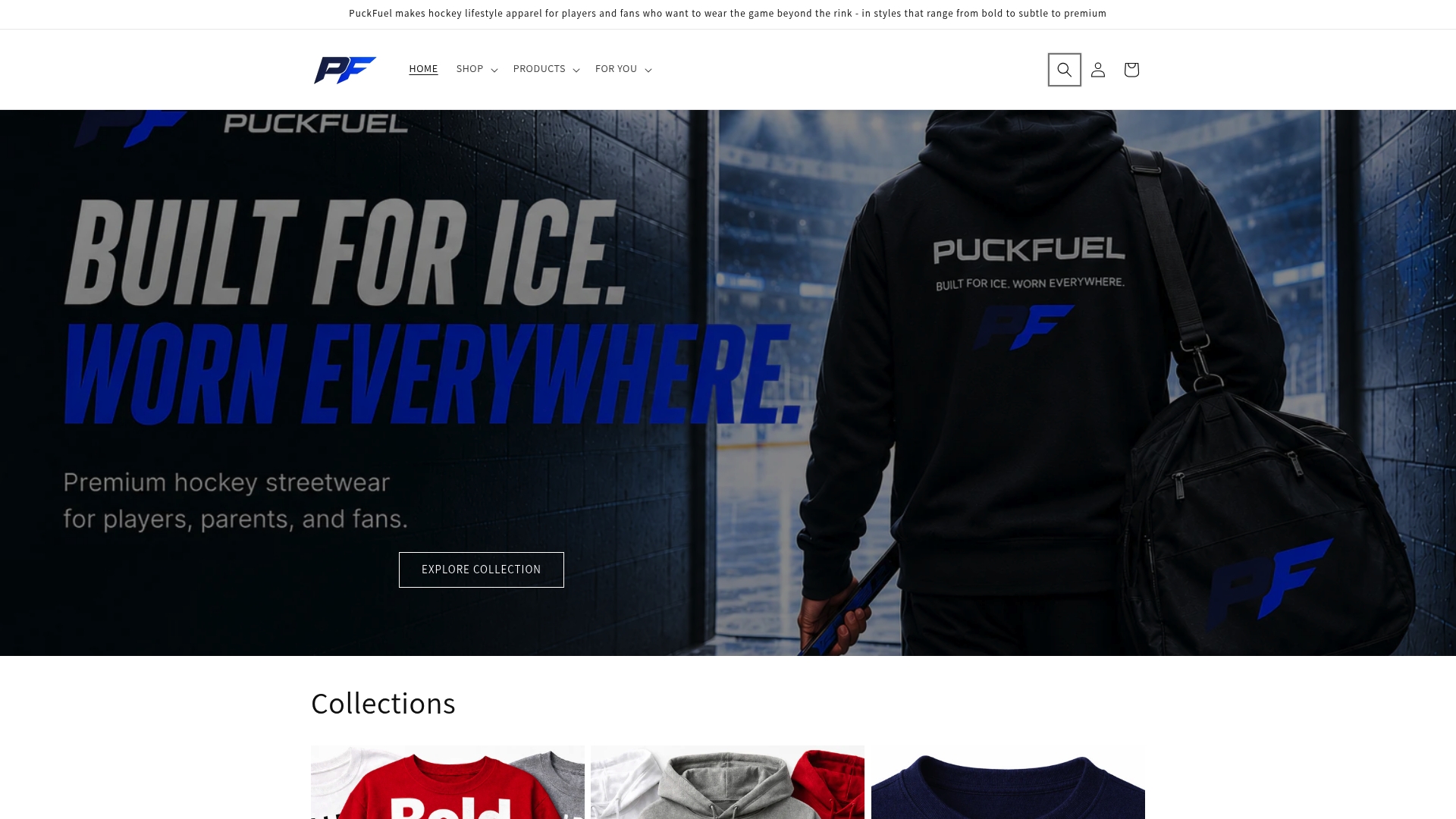
Puckfuel makes high-end hockey apparel for players, fans, and hockey moms who want to wear their identity off the ice. The vintage-inspired tees, hoodies, and hats use modern cotton blends that hold their shape and color through real-world wear. No authentication anxiety. No fragile prints. Just bold, clean hockey graphics on gear that fits the way it’s supposed to.
Every piece ships with clear sizing guides and a return policy built for online buyers. U.S. orders ship directly from the storefront, and customer support is reachable for fit questions or design requests before you order. If you want retro hockey style without the collector’s risk, browse the full collection at puckfuel.com and find the piece that speaks your game.