

Tri Blend vs Cotton: Which Fabric Wins in 2026?
Tri-blend and 100% cotton are the two most debated fabrics in casual apparel, and the answer to which is better depends entirely on what you need from your shirt. Tri-blend is typically composed of 50% polyester, 25% cotton, and 25% rayon, delivering superior softness, a lightweight drape, and minimal shrinkage. Cotton is a 100% natural fiber, breathable and tough, with unmatched color vibrancy and print sharpness. Here is the quick breakdown:
- Softness: Tri-blend wins from day one; cotton earns its softness over time
- Durability: Cotton handles years of hard washing better than tri-blend
- Color vibrancy: Cotton holds bold, sharp prints; tri-blend produces a faded, vintage aesthetic
- Shrinkage: Tri-blend shrinks less after washing due to its polyester content; cotton may shrink more.
- Cost: Tri-blend runs higher in price; cotton is more accessible at entry level
- Breathability: Both breathe well; cotton edges ahead in pure airflow
- Care: Tri-blend needs gentler washing and low heat; cotton tolerates more aggressive cycles
Neither fabric is universally superior. Your priority, comfort and fit versus long-term durability and print quality, decides the winner.
Table of Contents
- How tri blend vs cotton fabrics are actually constructed
- How softness, drape, and appearance set these fabrics apart
- Durability, care, and how each fabric holds up over time
- What you actually pay for tri-blend versus cotton apparel
- Which fabric suits which apparel use cases
- Environmental trade-offs between tri-blend and cotton
- Key Takeaways
- The fabric choice behind Puckfuel’s hockey apparel
- Puckfuel hockey apparel built for the rink and the street
How tri blend vs cotton fabrics are actually constructed
Understanding what each fabric is made of explains almost every performance difference you will notice on your body.
Tri-blend composition
Tri-blend combines three distinct fibers, each doing a specific job. Polyester (50%) acts as a thermoplastic skeleton, locking the knit structure in place after washing and resisting shrinkage. Cotton (25%) contributes natural breathability and that familiar feel against skin. Rayon (25%) is the secret ingredient: a semi-synthetic fiber derived from wood pulp through a viscose process, it gives tri-blend its silky surface, fluid drape, and slight stretch.Tri-blend fabrics weigh less than cotton at equivalent GSM and offer greater mechanical stretch with better recovery, thanks to polyester’s thermoplastic properties.
100% cotton composition
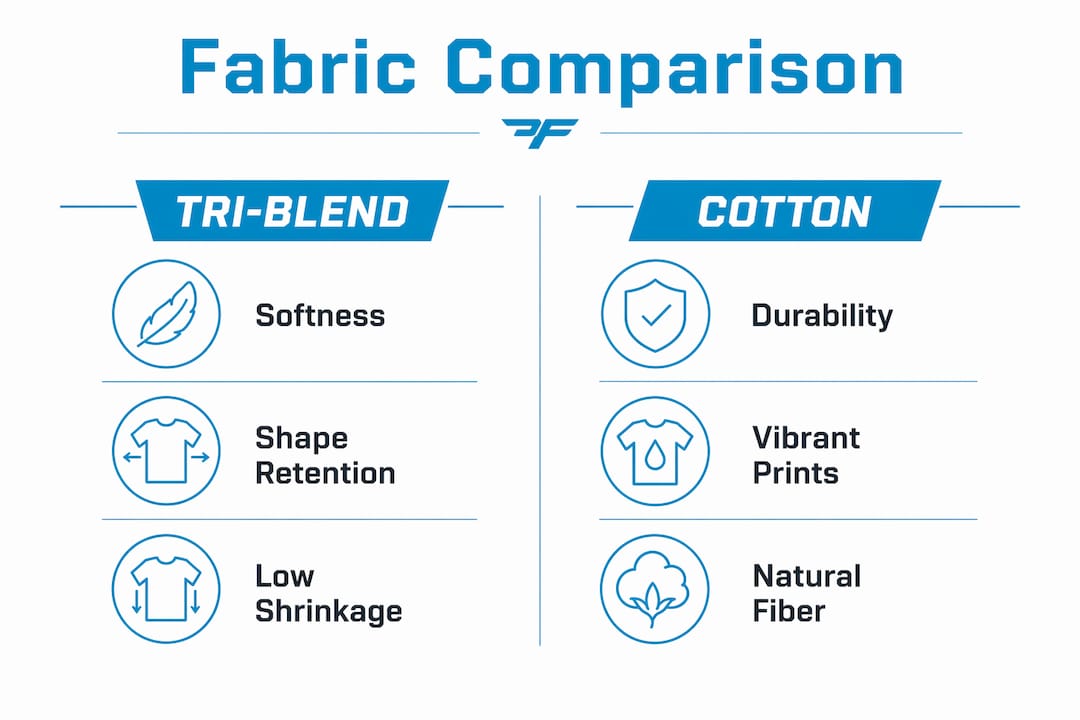
Cotton is a plant-based natural fiber, grown and processed without synthetic additives. It absorbs moisture rather than wicking it, which keeps you comfortable in dry conditions but can feel damp during intense activity. Cotton’s fiber structure is resilient under abrasion, which is why it resists pilling and holds up through hundreds of wash cycles. Heavier cotton weights (180 GSM and above) maintain structure and shape over years of use.
How fiber blends affect moisture and weight
- Polyester wicks moisture away from skin; cotton absorbs and holds it
- Rayon absorbs moisture too, making tri-blend moderate rather than performance-grade for sweat management
- Tri-blend sits lighter on the body; cotton varies widely by GSM but generally feels more substantial
- Cotton’s natural fiber breathes freely; polyester in tri-blend can trap some heat in humid conditions
The fiber ratio is not just a label. It is the reason these two fabrics feel and perform so differently from the first wear.
How softness, drape, and appearance set these fabrics apart
Pick up a tri-blend tee and a cotton tee of the same size. The difference is immediate. Tri-blend feels broken-in from the start, light and smooth, almost like a thinner second layer. That quality comes directly from the rayon component, which creates a silky hand feel cotton alone cannot replicate. Tri-blend tends to feel softer and drape better than 100% cotton, making it the go-to for everyday comfort apparel.
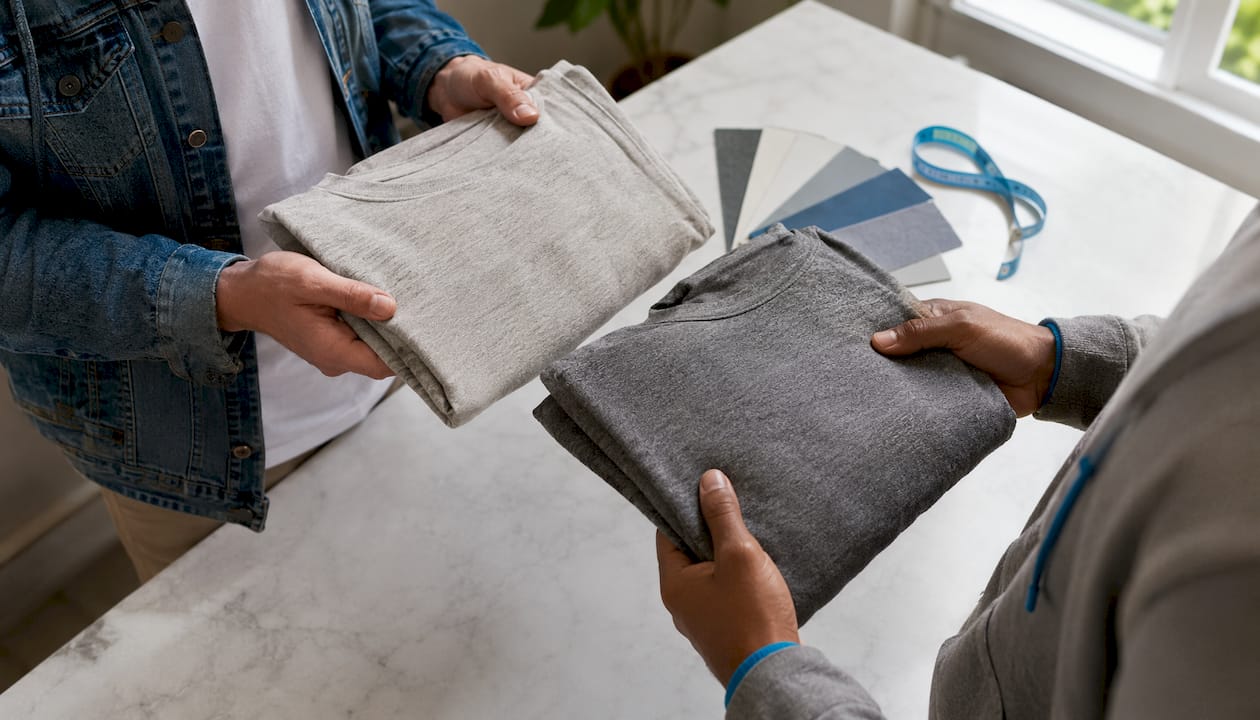
Cotton starts firmer. A new cotton tee has structure and a slight roughness that softens gradually with repeated washing. After a year of regular wear, a quality cotton shirt develops a lived-in texture that many people genuinely prefer. It earns its softness; tri-blend comes with it already built in.
The visual difference is just as stark. Because cotton, polyester, and rayon absorb dye differently during manufacturing, tri-blend produces a heathered, speckled appearance. A “heather grey” tri-blend is not solid grey; it is a textured mix of light and dark fibers woven together. Cotton, by contrast, holds a single dye evenly, producing deep, solid, vibrant colors.
- Tri-blend: heathered, vintage aesthetic with naturally faded tones
- Cotton: solid, bold colors with consistent dye absorption
- Tri-blend’s rayon adds silkiness and a slight stretch that cotton does not have
- Cotton maintains structural heft; tri-blend follows the body’s lines more closely
Pro Tip: Tri-blend is the right call for a boutique or vintage look with delicate, soft-edged prints. If your design demands sharp lines and vivid color blocks, cotton is your canvas.
Durability, care, and how each fabric holds up over time
Cotton is the long-game fabric. Its natural fibers are resilient under abrasion, and cotton offers superior durability with better performance in direct-to-garment printing than tri-blend. Run a cotton tee through weekly machine cycles for two years, and a well-made one at 180 GSM or above still looks and feels solid. That staying power is cotton’s clearest advantage over tri-blend.
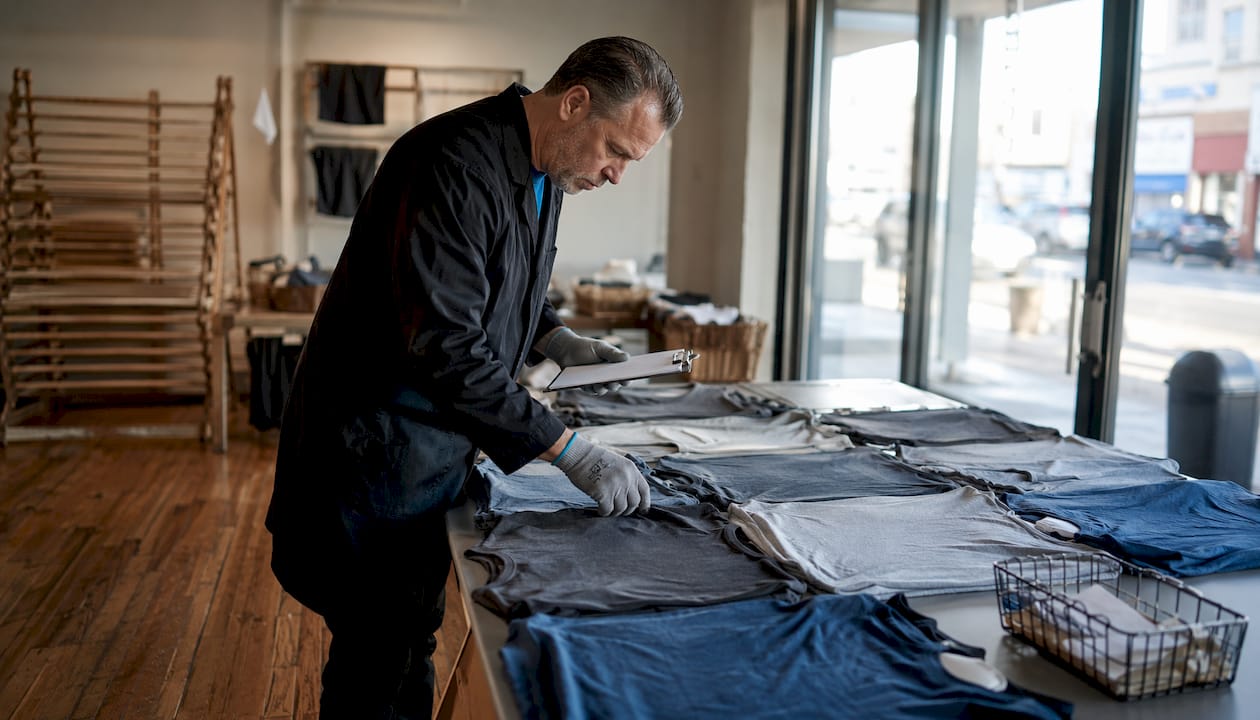
Tri-blend holds its shape well in the short term. Tri-blend’s polyester component reduces shrinkage to roughly 1.5–2.5% after washing, compared to 2–4% for combed cotton. That dimensional stability is a real selling point, especially for e-commerce where sizing consistency matters. The trade-off shows up over months of sustained use: tri-blend fabrics show more pilling and require gentler washing compared to 100% cotton, which resists pilling better and withstands heavy wash cycles.
Rayon is the weak link in tri-blend’s durability story. It degrades faster than cotton fibers under repeated mechanical washing, gradually thinning the fabric. That is not a reason to avoid tri-blend; it is a reason to wash it right.
Care guidelines that extend fabric life:
- Tri-blend: Machine wash cold, tumble dry on low heat, avoid high-heat dryer settings that accelerate rayon degradation
- Cotton: Machine wash warm or cold, tumble dry medium, iron when needed since cotton wrinkles easily
- Both: Turn inside out before washing to protect surface fibers and any printed graphics
- Tri-blend: Skip fabric softeners, which can coat synthetic fibers and reduce breathability over time
Cotton requires more ironing and wrinkles faster than tri-blend, which holds a smoother appearance between washes due to its polyester content. For a technical shirt that needs to look sharp with minimal effort, tri-blend’s wrinkle resistance is a practical advantage.
What you actually pay for tri-blend versus cotton apparel
Tri-blend costs more. That is the short version. The longer version is that the price gap reflects real material complexity: sourcing and blending three distinct fibers, including rayon which requires chemical processing, adds cost at every stage of manufacturing.
At wholesale, basic cotton tees typically have a lower price range compared to tri-blend blanks, which generally cost more. At retail, tri-blend tees have a higher price premium over cotton. Those figures reflect the blank garment market broadly and will vary by brand, weight, and construction quality.
Where each fabric justifies its price:
- Tri-blend’s premium is earned through comfort, reduced returns from shrinkage, and a luxury hand feel that commands higher retail prices
- Cotton’s lower cost makes it the practical choice for bulk orders, promotional tees, and print-forward designs where fabric feel is secondary to graphic impact
- For a lifestyle brand selling premium apparel, tri-blend’s softness reduces buyer regret and repeat returns
- Cotton offers better value when print vibrancy and long-term garment longevity are the priorities
The cost decision is really a positioning decision. If you are building a premium streetwear or lifestyle line, tri-blend’s price premium is part of the product story. If you are producing high-volume branded tees where bold graphics do the talking, cotton keeps margins healthy without sacrificing quality.
Which fabric suits which apparel use cases
The right fabric depends on what the shirt needs to do and how often it gets washed.
Cotton is favored for long-term durability and hard daily use, while tri-blend excels in initial softness and casual comfort. That distinction maps directly to use case. A work uniform rotated five days a week through industrial washing needs cotton’s resilience. A weekend lifestyle tee worn for errands, layered under a jacket, or thrown on after a skate session is exactly where tri-blend shines.
Tri-blend is the stronger choice for:
- Casual, comfort-first daily wear where softness and drape matter most
- Layering under hoodies or jackets, where its thinner profile sits flat without bunching
- Premium lifestyle and streetwear shirts where the vintage aesthetic adds brand value
- Warm-weather wear, where its lighter weight improves comfort
Cotton is the stronger choice for:
- Print-forward designs requiring sharp, vibrant graphics
- Long-term, heavy-use apparel that needs to survive years of aggressive washing
- Natural-fiber purists who prefer breathability and a classic structured feel
- Budget-conscious bulk orders where cost per unit matters
Pro Tip: Match your fabric to your washing frequency. If you wear and wash a shirt multiple times a week, cotton’s durability outlasts tri-blend’s rayon component over the long run. For occasional wear and lighter use, tri-blend’s comfort advantage holds up well.
Understanding how cotton and polyester interact in blended fabrics also helps when choosing between tri-blend and heavier cotton options for outerwear like hoodies, where weight and warmth play a bigger role than in tees.
Environmental trade-offs between tri-blend and cotton
Neither fabric is a clean environmental win. Both carry trade-offs, and knowing them helps you make a more informed choice.
Cotton is natural and biodegradable. At end of life, it composts and returns to the soil without leaving synthetic residue. The problem is upstream: conventional cotton farming is water-intensive and relies heavily on pesticides and fertilizers, contributing to soil erosion and water pollution. Organic cotton addresses some of those issues but costs more and is not universally available.
Tri-blend’s environmental story is more complicated. Tri-blend’s multi-fiber composition complicates recycling, making cotton more straightforward to dispose of responsibly. Polyester is petroleum-derived and sheds microplastics with every wash cycle, contributing to water pollution in ways that are difficult to reverse. Rayon requires chemical processing of wood pulp, adding an energy and chemical footprint that pure cotton avoids.
Key environmental considerations:
- Cotton biodegrades; tri-blend’s polyester and rayon content does not break down easily
- Tri-blend’s mixed fibers cannot be separated for recycling, making it harder to process at end of life
- Conventional cotton farming uses significant water and pesticide inputs; organic cotton reduces but does not eliminate this
- Polyester in tri-blend contributes to microplastic pollution with each machine wash
- Garment longevity matters: a durable cotton tee worn for three years has a lower per-wear footprint than a tri-blend that thins and gets discarded after one
If sustainability is a priority, a well-made, long-lasting cotton garment from a responsible source generally has a simpler end-of-life profile than a tri-blend. That said, a tri-blend worn frequently and cared for properly can still represent a reasonable environmental choice compared to fast-fashion cotton that gets replaced every season.
Key Takeaways
Tri-blend delivers unmatched softness and shape retention from day one, while cotton offers superior durability, vibrant print quality, and a simpler environmental profile for long-term apparel use.
| Point | Details |
|---|---|
| Tri-blend composition | Made from 50% polyester, 25% cotton, and 25% rayon, giving it softness, drape, and low shrinkage. |
| Cotton durability advantage | Cotton resists pilling better and handles heavy wash cycles that degrade tri-blend’s rayon over time. |
| Shrinkage difference | Tri-blend shrinks roughly 1.5–2.5% after washing; combed cotton can shrink 2–4% without pre-treatment. |
| Print quality split | Cotton produces sharp, vibrant prints; tri-blend creates a softer, faded, vintage print aesthetic. |
| Puckfuel fabric approach | Puckfuel uses both tri-blend and cotton across its hockey apparel line to match comfort and graphic needs. |
The fabric choice behind Puckfuel’s hockey apparel
Here is an opinion worth stating plainly: most apparel brands pick one fabric and defend it like a religion. That is the wrong approach, especially for hockey culture, where the person wearing the shirt might be a grinder who skates four days a week or a hockey mom who wants something that looks sharp at the rink and holds up through a busy week.
Tri-blend’s vintage aesthetic and buttery softness are genuinely well-suited to lifestyle and streetwear pieces. A heathered tee with a clean hockey graphic hits differently than a stiff cotton blank. The drape, the way it sits on the body, the fact that it feels broken-in from the first wear: those qualities matter when you are building apparel people want to wear off the ice, not just at the rink. For premium lifestyle shirts where the feel of the fabric is part of the product, tri-blend earns its price.
But cotton is not a compromise. For bold, graphic-forward designs where color vibrancy and print sharpness carry the visual weight, cotton is the technically superior choice. A sharp hockey logo printed on premium cotton holds its edge through years of washing in a way that tri-blend simply cannot match. Cotton also suits customers who want a shirt that lasts, wears hard, and still looks solid two seasons later.
The honest take: the best hockey apparel brands do not choose between these fabrics. They use each where it performs best. Tri-blend for the soft, premium, lifestyle pieces. Cotton for the graphic-heavy, bold, long-lasting staples. Forcing one fabric to do everything is how you end up with shirts that compromise on both fronts.
Puckfuel hockey apparel built for the rink and the street
You know the difference between a shirt you wear and a shirt you reach for. Puckfuel builds the second kind.
Puckfuel’s hockey-themed apparel line covers T-shirts, hoodies, hats, and drinkware designed for players, fans, and hockey moms who want to wear their sport with pride every day, not just on game day. The collection spans bold graphic tees for those who want their hockey identity front and center, and cleaner, premium styles for everyday streetwear that speaks the language of the game without shouting it. Whether the priority is a soft, draping tri-blend lifestyle tee or a vibrant cotton piece built to hold a sharp graphic for years, Puckfuel’s lineup is built around that choice. No generic blanks. No compromises on feel or finish. Head to Puckfuel and find the shirt that fits how you play and how you live.