Hoodie Sizing Guide: Get the Right Fit Every Time
What measurements actually determine your hoodie size?
Three numbers decide whether a hoodie fits or fails: chest width, body length, and sleeve length. Get all three right, and everything else falls into place. Miss one, and you’re either swimming in fabric or fighting your seams every time you move.
Here’s what to check before you commit to a size:
- Chest width: Lay the hoodie flat and measure armpit to armpit, about an inch below the sleeve. That flat number is half the chest circumference. Double it to compare against your body measurement.
- Body length: Measure from the highest point of the shoulder straight down to the bottom hem. This is called the HPS (Highest Point of Shoulder) method, and it’s the industry standard for accuracy.
- Sleeve length: Cuffs should reach your wrist bone when your arms hang relaxed. Expect them to ride up slightly when you raise your arms. That’s normal, not a sizing problem.
- The pinch test: Grab the fabric at your side. One to two inches of excess is the ideal fit window. Less than one inch is too tight; more than two inches and the hoodie is too loose.
- Shoulder seam position: The seam should sit right at the shoulder bone. Too far down your arm means too wide. Riding toward your neck means too narrow.
- Hem length: The bottom of the hoodie should land between mid-fly and mid-zipper of your pants. Too high looks cropped; too low shortens your legs visually.
- Layering allowance: If you plan to wear a layer underneath, add 2–4 inches to your chest measurement when selecting a size.
Table of Contents
- Standard hoodie size charts with key measurements
- How to measure your hoodie and your body accurately
- How fit style, fabric weight, and layering change your size choice
- Key Takeaways
Standard hoodie size charts with key measurements
Size charts list garment measurements, not body measurements. That distinction matters. A chest measurement of 22 inches on a size chart is the flat, half-circumference reading. Your body measures 44 inches around the chest? That’s a Large in most unisex charts.
Unisex/men’s hoodie sizes
| Size | Chest (inches, full) | Body length (inches) | Sleeve length (inches) |
|---|---|---|---|
| S | Approximately Small range | Typical body length | Typical sleeve length |
| M | Approximately Medium range | Typical body length | Typical sleeve length |
| L | Approximately Large range | Typical body length | Typical sleeve length |
| XL | Approximately Extra Large range | Typical body length | Typical sleeve length |
| 2XL | Larger sizes | Typical body length | Typical sleeve length |
| 3XL | Largest sizes | Typical body length | Typical sleeve length |
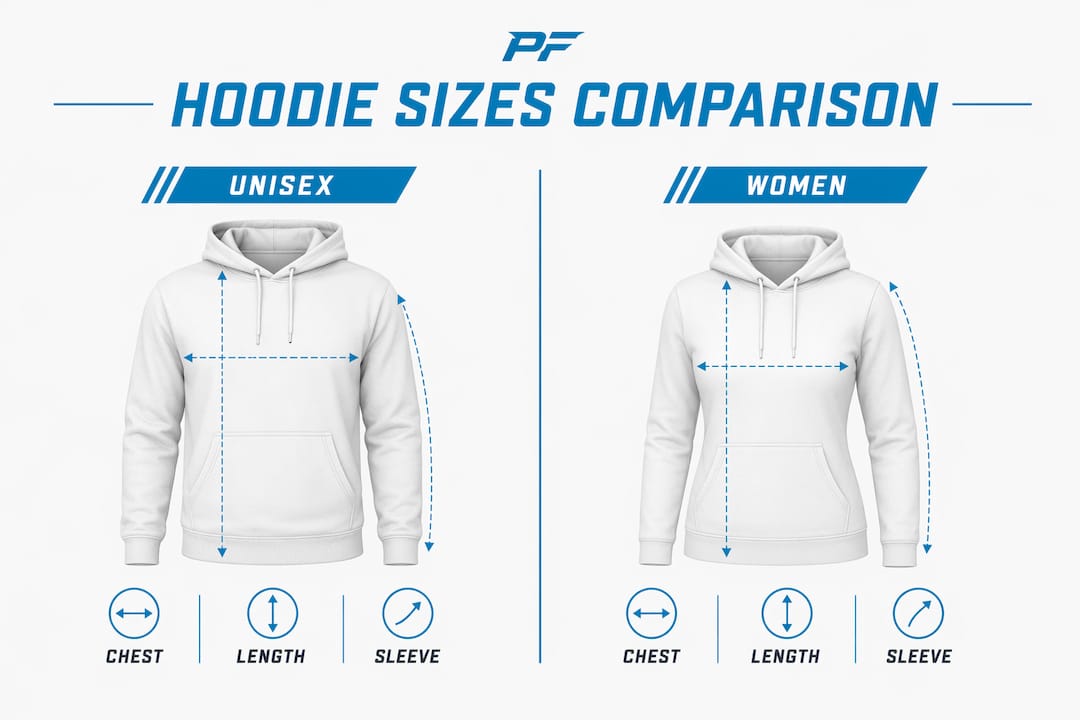
Women’s hoodie sizes
| Size | Chest (inches, full) | Body length (inches) | Sleeve length (inches) |
|---|---|---|---|
| S | Approximately Small range | Typical body length | Typical sleeve length |
| M | Approximately Medium range | Typical body length | Typical sleeve length |
| L | Approximately Large range | Typical body length | Typical sleeve length |
| XL | Approximately Extra Large range | Typical body length | Typical sleeve length |
| 2XL | Larger sizes | Typical body length | Typical sleeve length |
Women’s sizing runs shorter in both body and sleeve. Many women prefer unisex sizing for a relaxed, streetwear-style fit. That’s a personal call, not a sizing error.
Youth hoodie sizes
| Size | Age range | Chest (inches, full) | Body length (inches) |
|---|---|---|---|
| YS | Child size range | Typical chest range | Typical body length |
| YM | Child size range | Typical chest range | Typical body length |
| YL | Child size range | Typical chest range | Typical body length |
Never scale youth sizes off the adult chart. Youth hoodies use their own grading, and a youth Large often lines up closer to an adult Small than anything else.
International sizing note: Most US size charts use inches. European and Asian charts typically use centimeters. A US Large chest width of roughly 24 inches converts to approximately 61 cm. When shopping from international brands, always convert and compare the actual garment measurements rather than trusting the size label alone.
How to measure your hoodie and your body accurately
The most reliable method is measuring a hoodie you already own and love. That garment tells you exactly what measurements feel right on your body, without any guesswork about ease or fit preference.
Measuring an existing hoodie (flat method):
- Lay the hoodie face-up on a hard, smooth surface. No carpet; it distorts the fabric.
- Chest width: Measure straight across from underarm seam to underarm seam, about one inch below where the sleeve meets the body. Double this number for the full chest circumference.
- Body length: Start at the HPS (the point where the shoulder seam meets the neckline) and measure straight down to the bottom hem. Starting from the center of the neck is a common mistake that produces a shorter, inaccurate reading.
- Sleeve length: Measure from the center collar, across the shoulder seam, and down to the end of the cuff.
Measuring your body directly:
- Wrap a flexible tape measure around the fullest part of your chest, keeping it snug but not tight.
- For torso length, measure from your shoulder down to where you want the hem to fall.
- Once you have your chest circumference, add 2–4 inches for a comfortable fit with room to layer.
Pro Tip: When you land between two sizes on a chart, always size up. A slightly roomier hoodie is comfortable and wearable. A too-small hoodie gets left in the drawer.
How fit style, fabric weight, and layering change your size choice
Knowing your measurements is half the job. The other half is understanding how the hoodie was designed to fit in the first place.
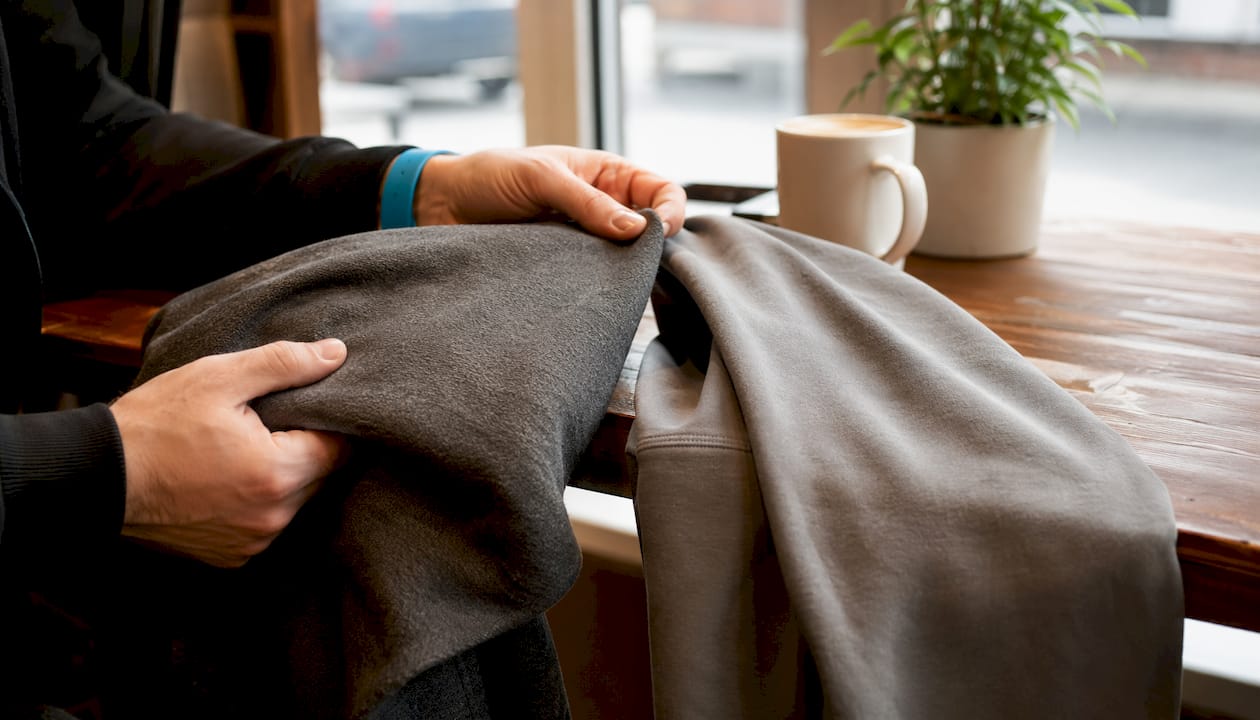
Fit styles and what they mean for sizing
Three distinct silhouettes exist, and they are not interchangeable:
- Slim fit: Shoulder seams sit right at the bone, minimal chest room, cuffs land exactly at the wrist. Built for layering under jackets or for a clean athletic look. The pinch test typically yields under one inch of excess.
- Regular fit: The North American standard. Shoulder seam at the bone, one to two inches of chest room, hem at the hip. This is what most people picture when they think “hoodie.” Sizes run true to chart.
- Oversized fit: This is a design decision, not just a size-up. Oversized hoodies feature dropped shoulder construction and a boxy pattern built into the garment. Simply ordering a size larger in a regular hoodie does not replicate this look. The shoulder seam intentionally sits one to two inches past the natural shoulder bone.
For a practical breakdown of how different hoodie styles affect fit and comfort, the hoodie comfort guide from Plaid Gorilla Golf covers the key fit tests in detail.
How fabric weight shifts your size
Fabric weight, measured in GSM (grams per square meter), directly affects how a hoodie drapes and fits. A 250 GSM hoodie in your true size reads slim and close to the body. The same pattern in 400 GSM feels boxier and more structured, because the dense material takes up physical space inside the garment.
Hoodies in the 350–420 GSM range hold their shape best and sit somewhere between structured and flexible. Under 300 GSM, expect the fabric to drape loosely, almost like loungewear. Above 400 GSM, the hoodie won’t stretch to accommodate movement the way a midweight fleece does. If you’re buying heavyweight cotton construction, factor in vertical shrinkage from the first wash.
Pro Tip: For hockey use or active wear, cotton-poly blends in the 300–380 GSM range give you structure without restricting your range of motion. Pure cotton heavyweights look great but can feel restrictive when you’re moving hard.
Layering and the seated hem test
Planning to wear a hoodie over a base layer or under a shell? Add one full size to your usual pick. The extra room through the chest and shoulders is the difference between a comfortable layered setup and a jacket that binds every time you lift your arms. For standalone wear, your true size is right.

One quick check that most people skip: sit down while wearing the hoodie. If the hem rides up and exposes your waistband significantly, the hoodie is too short for everyday active wear. A well-fitted hoodie stays put whether you’re standing at the boards or sitting in the locker room.
Key Takeaways
Accurate chest, length, and sleeve measurements combined with the pinch test and shoulder seam check give you a reliable hoodie fit every time.
| Point | Details |
|---|---|
| Double the flat chest width | Size charts list half-circumference; double it to match your full body chest measurement. |
| Use HPS for body length | Measure from the Highest Point of Shoulder, not the center neck, for accurate body length. |
| Pinch test window | One to two inches of fabric excess at the chest is the standard fit window for a regular hoodie. |
| Fabric GSM changes fit | Hoodies 350–420 GSM hold shape and structure; under 300 GSM drape loosely like loungewear. |
| Size up for layering | Add 2–4 inches to your chest measurement, or go up one size, when planning to layer underneath. |
Ready to put this to use? Puckfuel’s hockey hoodies are built for players and fans who want premium fit and real hockey identity in everyday wear. Size charts are listed on each product page.