

Hockey Team Fundraising Ideas: Apparel & Merch Playbook
The fastest, highest-ROI move for any hockey team fundraiser is a pre-order apparel and drinkware drive, backed by one or two community events and a single digital collection tool. That combination raises real money without burning out the same three parents every season.
- Lead with merch: A pre-order window for T-shirts, hoodies, and travel mugs converts your roster’s existing pride into cash, with zero leftover inventory risk.
- Stack one event on top: A tournament pop-up booth, online raffle, or 50/50 draw multiplies your reach and creates impulse purchases that online-only stores never capture.
- Centralize everything digitally: One payment link, one spreadsheet, one treasurer. No cash envelopes. No chasing parents.
Puckfuel supplies the T-shirts, hoodies, hats, and drinkware that make this strategy work. Bold designs built for everyday wear, not just the rink.
Table of Contents
- What are the best hockey team fundraising ideas?
- How to run an apparel & drinkware pre-order fundraiser
- What event fundraisers fit the hockey calendar?
- How do you build sponsorship packages local businesses actually buy?
- How should your team handle payments and track collections?
- How do you market hockey merch so it actually sells?
- Sample margin calculator: T-shirts, hoodies, and drinkware
- Key Takeaways
- The merch-first approach is the one most teams overlook
- Puckfuel gear built for team fundraisers
What are the best hockey team fundraising ideas?
Ten ideas, ranked by effort-to-return ratio. Pick two or three that match your volunteer capacity.
- Apparel & drinkware pre-order — Design once, collect pre-orders for 2–4 weeks, fulfill. Zero inventory risk, strong margins. Pairs with every idea below.
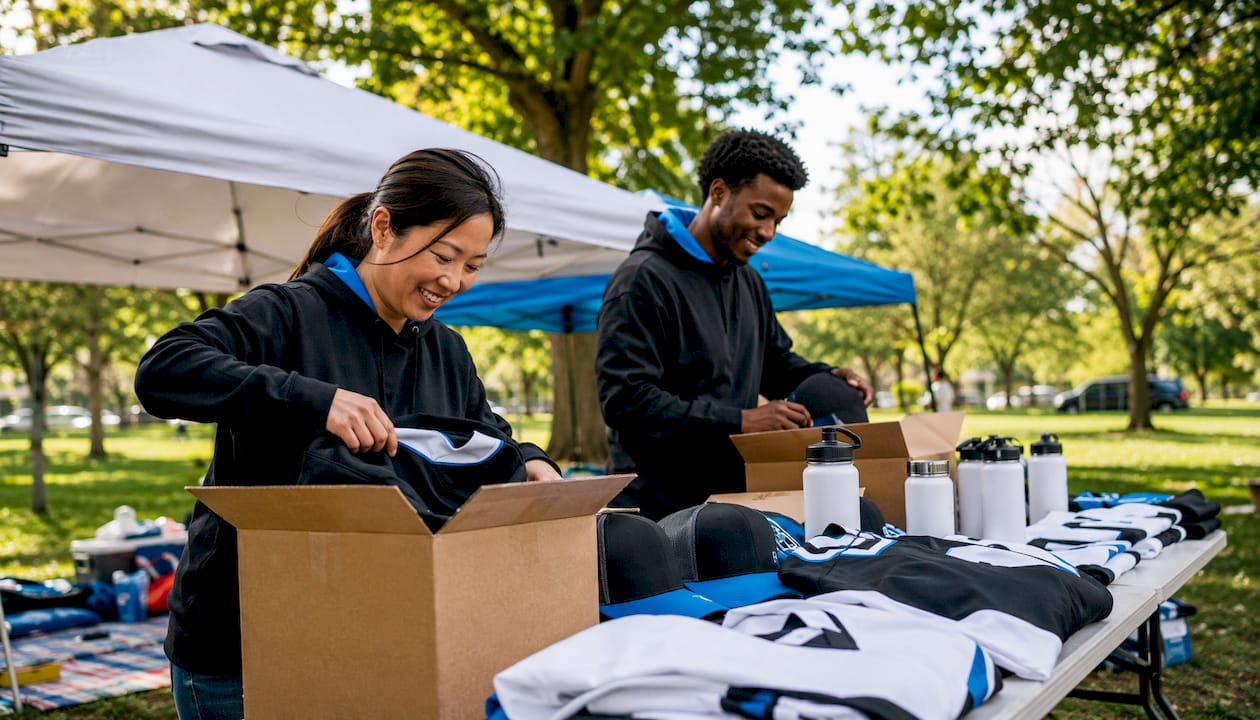
- Tournament pop-up merch booth — Set up samples and a card reader at your next tournament. Pop-up shops at tournaments convert browsers into buyers at rates online stores can’t match.
- Online 50/50 draw — Low setup, wide reach. Check your state’s raffle licensing rules before launching.
- Skate-a-thon — Players collect per-lap pledges. Turns practice ice into donations and keeps players front and center.
- Pancake breakfast — Run it on a tournament morning outside the rink. Low cost, high community feel, easy to staff.
- Bottle drive — Great for younger squads. Players and families collect refundable containers; simple logistics.
- Silent auction — Pairs best with high-value niche items like signed memorabilia, exclusive coaching clinics, or gift-card bundles. Generic prizes underperform.
- Virtual skills challenge — Players post videos, fans vote or donate. Low cost, high social sharing potential.
- Corporate sponsorship packages — Tiered offers (logo on jersey, rink-board signage, social shoutouts) can cover major overhead like ice time and travel.
- Product sale (cookie dough, chocolate, pasta) — Reliable supplemental earner with predictable margins. Works best when paired with a digital collection link so payments don’t go through backpacks.
How to run an apparel & drinkware pre-order fundraiser
The workflow is straightforward: design, open a pre-order window, collect payment centrally, send to production, distribute. Every step has a clear owner.
Roles and tasks
- Design owner — Finalizes artwork and size options with Puckfuel. Locks design before the pre-order window opens.
- Order manager — Runs the pre-order form, tracks submissions, and closes the window on deadline.
- Finance/tracking lead — Manages the single payment link, reconciles orders, and posts weekly updates to the team.
- Fulfillment contact — Coordinates delivery or pickup logistics once production is complete.
Sample pricing and margin
| Item | Unit cost (est.) | Suggested retail | Net profit/unit |
|---|---|---|---|
| T-shirt | — | $28 | — |
| Hoodie | $28 | — | $27 |
| Travel mug / stainless bottle | $14 | — | — |
A healthy merch fundraiser targets a strong gross margin after production costs. Selling a good number of hoodies with a solid net profit per item can clear a meaningful amount from one item alone.
Timeline
A multi-week pre-order window followed by a production buffer is the standard reliable timeline. Build in an extra week for distribution logistics, especially if you’re shipping to multiple households.
Pro Tip: Offer an early-bird discount for orders placed early in the pre-order window. Pair it with a player leaderboard showing who’s driven the most pre-orders. Both tactics consistently lift conversion without cutting deeply into margin.
If you end up with excess stock after the pre-order closes, sell remaining units at the next tournament booth or offer them as raffle prizes. Pre-order models eliminate most overstock risk by design, but having a digital money-pool as a fallback collection channel keeps late orders organized.
What event fundraisers fit the hockey calendar?
Tying fundraisers to the hockey schedule makes participation feel like part of the sport, not a separate obligation. Here’s how to map events to the season:
- Tryout season (August–September): Launch your merch pre-order here. New players and returning families are already spending on gear. Apparel fits the moment.
- Early-season tournament weekends: Pop-up merch booth. High foot traffic, families in a spending mood, and your designs are fresh. Plan 3–4 weeks ahead for booth setup and inventory.
- Mid-season (November–January): Pancake breakfast on a Saturday tournament morning. Low volunteer lift, high community turnout. Pair with a 50/50 draw for a second revenue stream on the same day.
- Playoff windows (February–March): Alumni or charity game night. Draws a crowd that buys tickets, food, and raffle entries. Local media often picks it up. Plan 6–8 weeks out.
- Off-season (May–July): Golf tournament or golf simulator event with hole sponsors from local businesses. Keeps fundraising momentum year-round without competing with game-day schedules.
Combining any event with a merch booth adds impulse revenue. Families who wouldn’t seek out an online store will buy a hoodie when they can feel the fabric and see a teammate wearing it.
How do you build sponsorship packages local businesses actually buy?
The simplest sponsor offers are tiered packages tied to clear deliverables and measurable audience reach. Position sponsorships as local marketing buys, not charity asks, and businesses say yes far more often.
Typical package tiers:
- Bronze ($250–$500): Logo on team social posts (season-long), name in event programs, verbal shoutout at one event.
- Silver ($500–$1,000): Logo on team jerseys or practice gear, rink-board signage, two social posts per month, sponsor table at one event.
- Gold ($1,000+): All Silver benefits plus logo on all merch (T-shirts, hoodies), featured sponsor at tournament, dedicated social campaign, and a local business sponsorship receipt for tax purposes.
Email pitch outline:
Subject: [Team Name] — Local Sponsorship Opportunity This Season We’re [Team Name], a [city] youth hockey team with [X] players and [X] families in your community. We’re offering a Silver sponsorship for $750 that puts your logo on our jerseys and in front of hundreds of rink-side families this season. Interested? I can send a one-page package in five minutes.
Pro Tip: Non-cash sponsorships count. A local restaurant donating gift cards for a raffle, or a print shop donating banner printing, has real monetary value. Assign a dollar amount, issue a receipt, and count it toward your goal.
Track sponsor ROI with simple metrics: event attendance, social post impressions, and photos of signage in use. Send a one-page recap after the season. Sponsors who see results renew.
How should your team handle payments and track collections?
Use a single digital collection tool plus routine public updates. That combination keeps things transparent and stops reconciliation from becoming a second job for one exhausted parent.
Operational rules:
- Set a clear dollar goal and a hard deadline before you launch anything.
- Create one payment link (Venmo, PayPal, or a dedicated crowdfunding platform) and share only that link.
- Assign one treasurer. One person sees the money. Everyone else sees the progress update.
- Require receipts or written confirmation for all in-kind donations.
- Post a weekly progress update to the team group chat. Visibility drives momentum.
Recommended tools:
- Digital money pool or crowdfunding platform — Collects contributions from a single shareable link, tracks every payment automatically, and eliminates cash envelopes.
- Square or similar POS — For in-person sales at tournament booths or events. Card readers are cheap and expected.
- Google Sheets or a simple finance app — Reconcile orders, track expenses, and share read-only access with team leadership.
One legal note: online 50/50 draws and raffles require licensing that varies by state. Check your state’s gaming or charitable solicitation rules before selling tickets. School and league policies may add another layer.
This article is general information, not legal or financial advice. Confirm current rules with your state’s relevant authority or a qualified professional.
How do you market hockey merch so it actually sells?
Player- and family-driven social proof plus on-site visibility move the most merch. Your players are your best sales team.
Pro Tip: Post social content within 30 minutes of a big win or a tournament highlight. Engagement spikes right after games. A photo of players in your merch with a pre-order link in the caption converts at a higher rate than any scheduled post.
- Sample social copy: “Rink-ready and street-ready. Pre-order your [Team Name] hoodie before [deadline] — link in bio.”
- Email subject line: “48 hours left to grab your [Team Name] gear.”
- Team chat prompt: “Tag a teammate who needs this hoodie. Pre-order closes Friday.”
- In-venue setup: Place your booth near the main entrance, not the back corner. Have at least two sizes on display as samples. A card reader is non-negotiable.
- Gamification: Track which player drives the most pre-orders. Winner gets a free item or skips a drill. Friendly competition works.
Sample margin calculator: T-shirts, hoodies, and drinkware
A healthy fundraiser margin targets a strong gross margin on merch after production and platform fees.
| Item | Unit cost | Platform/shipping fee | Suggested retail | Net profit/unit |
|---|---|---|---|---|
| T-shirt | — | $2 | $28 | $14 |
| Hoodie | $28 | $3 | — | $27 |
| Travel mug | $14 | $2 | — | — |
Worked example: 100 T-shirts sold at $28 retail, $14 net each = $1,400. Add 50 hoodies at $27 net = $1,350. Combined: $2,750 from one pre-order round.
Local pickup eliminates per-unit shipping fees and adds $2–$4 to net profit per item. If your team is spread across a wide area, offer both options and let buyers choose at checkout.
Key Takeaways
A pre-order apparel and drinkware fundraiser, supported by one community event and a single digital payment tool, is the most efficient way to raise funds for a hockey team without burning out volunteers.
| Point | Details |
|---|---|
| Lead with merch pre-orders | A 2–4 week pre-order window with a 4–6 week production buffer is the reliable standard timeline. |
| Target strong gross margin | Price T-shirts, hoodies, and drinkware to clear at least $14 net per unit for T-shirts and $27 net per unit for hoodies after fees. |
| Centralize all payments | One digital payment link and one treasurer eliminates reconciliation errors and parent burnout. |
| Tie events to the hockey calendar | Tournament weekends, playoff windows, and tryout season are the highest-traffic moments for merch and event fundraisers. |
| Puckfuel for apparel and drinkware | Puckfuel supplies T-shirts, hoodies, hats, and drinkware designed for everyday wear and built for pre-order fundraiser workflows. |
The merch-first approach is the one most teams overlook
Most teams default to bake sales and bottle drives because they’re familiar. Nothing wrong with either. But they cap out fast, and the margin per volunteer hour is low.
What actually scales is merch. Your players already wear the identity. Your fans already want to rep the team. A pre-order fundraiser converts that existing pride into revenue without asking anyone to do anything they wouldn’t do anyway. The key is timing it to a moment when the community is already paying attention, like a tournament weekend or the start of a new season, and making the product worth owning beyond the fundraiser itself.
That last part matters more than most teams realize. Gear people actually wear in everyday life generates ongoing visibility for the team. It’s a walking advertisement and a fundraiser in one. Generic, low-quality merch ends up in a drawer. Premium designs get worn to the grocery store, to school, to the airport. That’s the difference between a one-time transaction and a piece of team culture.
The other thing teams consistently underestimate is how much centralized digital tracking changes the experience for everyone involved. When one parent isn’t chasing 25 families for Venmo payments, the whole operation runs cleaner and people are more willing to volunteer next time.
Puckfuel gear built for team fundraisers
Your team’s fundraiser deserves merch people actually want to wear. Puckfuel supplies hockey-themed apparel and drinkware — T-shirts, hoodies, hats, and travel mugs — designed with the bold, clean aesthetic that players, hockey moms, and fans reach for on and off the ice.
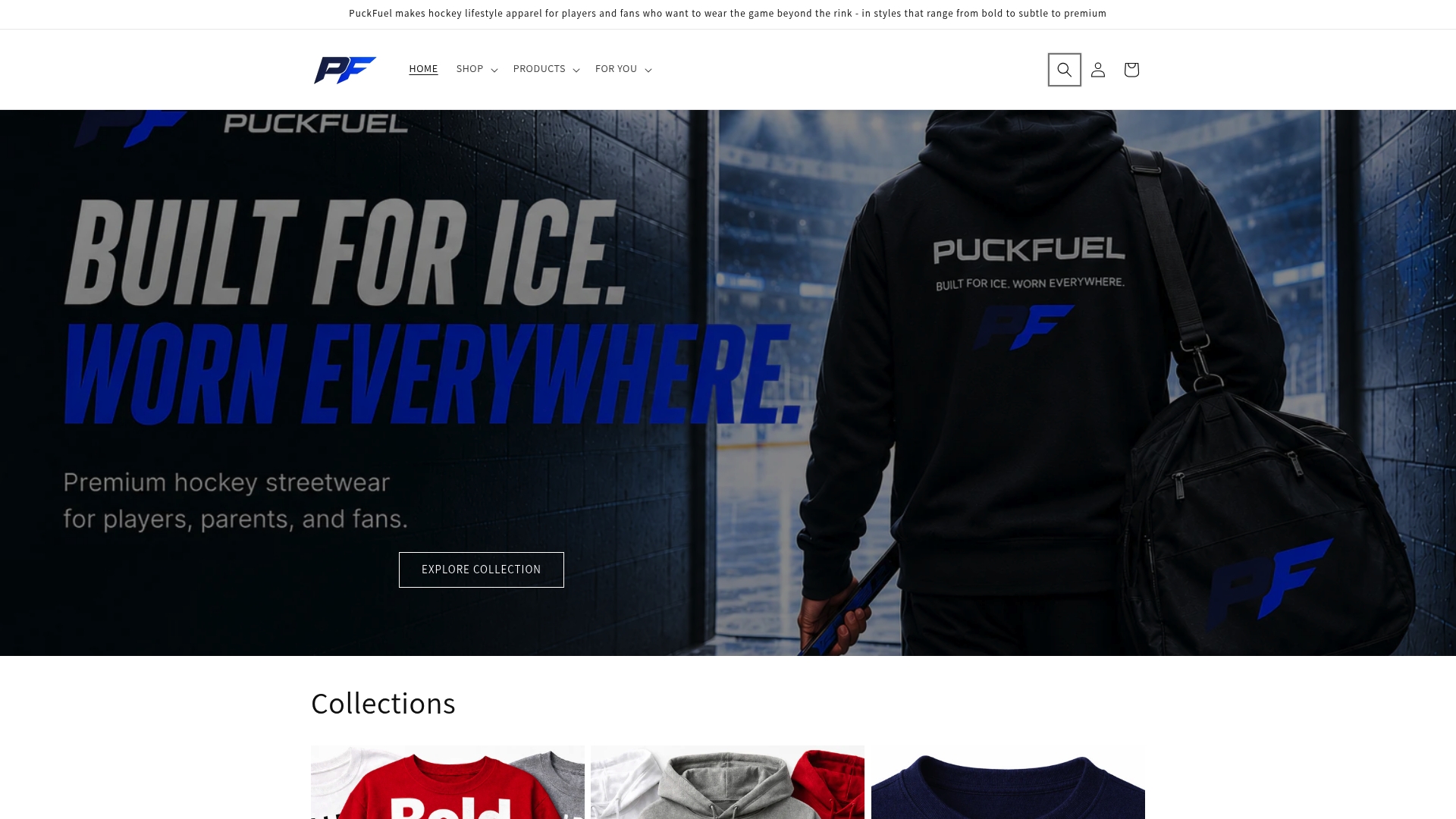
Pre-order fundraisers work best when the product is worth owning. Puckfuel’s designs are built for everyday wear, not just rink days, which means higher pre-order conversion and gear that keeps representing your team long after the fundraiser closes. Bold styles, subtle options, and premium cuts give every player and fan something that fits their look.
Ready to run your merch fundraiser? Visit puckfuel.com to browse designs, explore bulk options, and get your pre-order campaign set up.