

Heavyweight T-Shirt Meaning for Fans and Athletes
A heavyweight T-shirt is a crew-neck tee made from dense fabric that typically weighs 5.5–7+ oz/yd² (roughly 185–240+ GSM). That extra mass is what gives it opacity, structure, and a lifespan that outlasts the average fast-fashion tee by years. If you’re shopping for streetwear, fan gear, or rinkside apparel and are wondering whether to size up in fabric weight, here’s the short answer:
- Fabric at or above about 6 ounces per square yard is the U.S. market threshold most producers use to call a tee “heavyweight.” Below that, you’re in midweight or standard territory.
- Heavyweight tees are favored for streetwear, branded team apparel, and casual hockey fan wear because their denser knit helps prints last longer and offers a more polished look.
Pick heavyweight when you want structure, opacity, and durability. Stick with lighter options when breathability and quick-dry performance matter more.
Table of Contents
- What does “heavyweight” actually mean in a T-shirt?
- How do heavyweight tees actually perform?
- When should you actually wear a heavyweight tee?
- How to tell if a tee is actually heavyweight when shopping
- Caring for your heavyweight T-shirt
- Style tips and what people get wrong about heavyweight tees
- Puckfuel heavyweight tees built for the rink and the street
- Key Takeaways
- Why heavyweight fabric is the right call for hockey apparel
What does “heavyweight” actually mean in a T-shirt?
Fabric weight is measured in two units: ounces per square yard (oz/yd²), the standard in the U.S. market, and grams per square meter (GSM), common in international specs. They describe the same thing: how much material is packed into a given area of fabric. A higher number means a denser, thicker knit.
The industry breaks heavyweight into three practical subcategories roughly defined by increasing fabric weight and typical use: entry heavyweight, true heavyweight, and super heavyweight, each offering progressively more durability and structure.
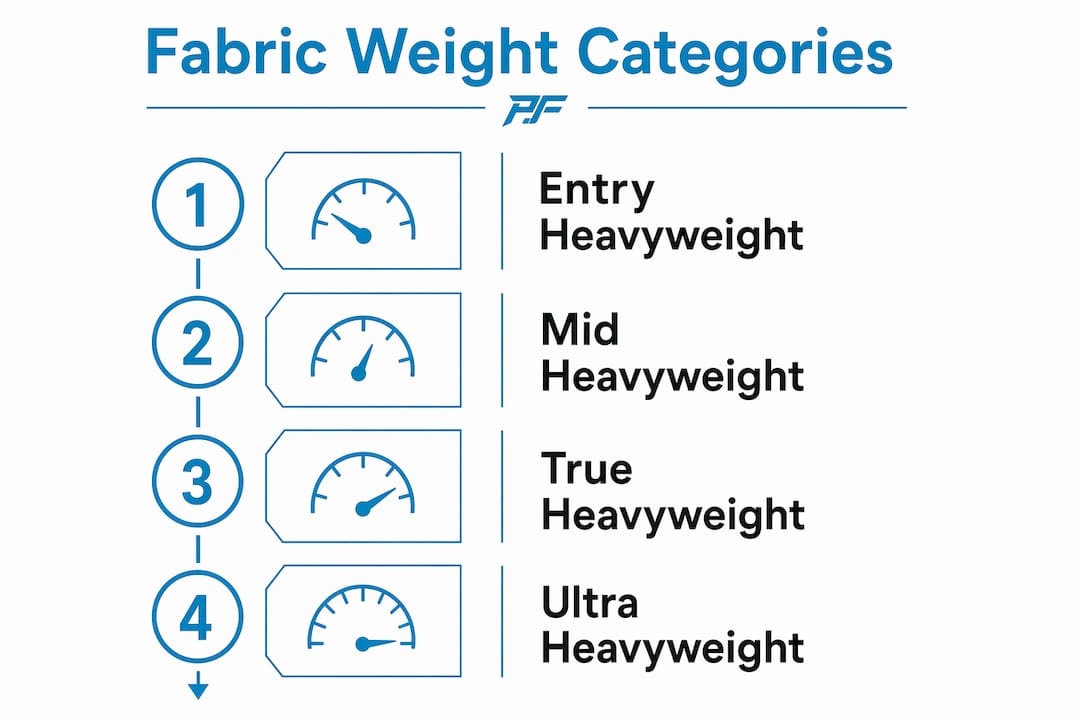
Moving from a standard 6.0 oz shirt to an 8.0 oz shirt raises manufacturing cost by roughly 33%, which explains the price premium you see on true heavyweights at retail.
Beyond raw weight, construction matters. Ring-spun cotton is the preferred yarn for premium heavyweights: the fiber is twisted and thinned into a smoother thread, so the finished shirt lands heavy in hand but soft on skin. Open-end (carded) cotton at the same weight feels noticeably coarser. Knit density also plays a role. A tighter loop structure creates a flatter, more stable surface, which is exactly what you want for print clarity and shape retention.
How do heavyweight tees actually perform?
The real benefits
- Opacity. Heavyweight fabric prevents the see-through effect common in lighter shirts, especially in white or light colors. No undershirt required.
- Structure and fit retention. The shirt holds its shape on the hanger and on your frame, wash after wash.
- Durability. Dense knits resist the stretch-and-thin cycle that kills lighter tees. A true heavyweight can realistically last five or more years of regular wear.
- Print and embroidery surface. Dense knits maintain print detail longer than high-stretch fabrics. Fine linework stays sharp; colors don’t bleed or fade as fast.
The trade-offs you should know
- Heat retention. Heavyweight shirts trap more heat and dry slower than lighter alternatives. That’s a real consideration in summer or during intense activity.
- Break-in period. Heavy yarns can feel stiff or slightly abrasive before the first few washes, especially without garment finishing.
- Slower drying. Thicker fabric holds moisture longer, which matters after a workout or in humid conditions.
Pro Tip: For low-intensity fan wear or rinkside use, a true heavyweight tee is a solid call. For high-cardio training sessions, a lighter performance fabric will serve you better. The heavyweight earns its place off the ice, not during a full practice.
When should you actually wear a heavyweight tee?
Heavyweight tees shine in specific situations. Knowing where they fit saves you from buying the wrong shirt for the wrong moment.
Reach for a heavyweight when:
- The weather is cold or transitional. The extra fabric layer adds warmth without needing a full jacket.
- You’re wearing branded or printed apparel. The stable surface keeps graphics looking clean longer.
- You want a structured streetwear look. Boxy, oversized silhouettes only work when the fabric has enough weight to hold the shape. A 4.5 oz tee cut oversized collapses; a 7 oz tee holds the architecture.
- You’re wearing it as casual hockey fan gear, rinkside, or to a watch party. Comfort, durability, and a sharp look all check out.
Skip the heavyweight when:
- You’re doing intense cardio or on-ice training. Heat retention becomes a liability fast.
- You’re traveling light in hot climates without easy laundry access. Slower drying is a real inconvenience.
- You need a layering base under compression or performance gear. A lighter tee sits flatter and breathes better underneath.
For layering under a jacket or hoodie, heavyweight tees actually work well. The fabric doesn’t bunch, and the structure keeps the collar and shoulders sitting right. Check out how heavyweight tees layer in athletic looks for a sense of how the silhouette reads in practice.
How to tell if a tee is actually heavyweight when shopping
Reading the label
Look for oz/yd² or GSM in the product specs. Entry heavyweight starts at 5.5–6.0 oz/yd² (about 185–200 GSM). True heavyweight is 6.1–7.0 oz/yd². Anything above 7.1 oz/yd² is super heavyweight. If the spec isn’t listed, that’s a signal the brand isn’t confident in the weight.
In-store checks
- Hold the shirt up to a light source. A true heavyweight in white should show no skin tone through the fabric.
- Let it drape from one hand. Heavyweight fabric falls with a defined weight; it doesn’t flutter or cling.
- Check the hem and stitch density. Tighter stitching and a reinforced hem indicate a denser construction.
- Feel the yarn. Ring-spun cotton has a noticeably smoother hand than open-end cotton at the same weight.
Online shopping signals
- Look for the GSM or oz/yd² figure in the product description. Reputable brands list it.
- “Ring-spun cotton” in the fabric notes is a positive indicator of quality construction.
- Structured product photos where the shirt holds its shape on a flat lay (not draped loosely) suggest real weight.
- Check whether the shirt is labeled pre-shrunk or garment-washed. That affects both the hand feel and sizing accuracy.
Pro Tip: A boxy heavyweight short sleeve shirt from a reputable retailer is a useful reference point. Compare how the product photos, fabric specs, and label reads against what you find elsewhere.
Caring for your heavyweight T-shirt
Heavy cotton needs a little more attention than a standard tee, but the routine is simple.
- Wash cold on a gentle cycle. Hot water accelerates shrinkage in unwashed heavy cotton. Cold water preserves the knit structure.
- Wash with similar colors. Dense fabric holds dye well, but dark colors can still bleed on the first few washes.
- Air-dry or use low heat. High dryer heat is the fastest way to shrink a heavyweight tee. Air-drying preserves both size and structure.
- Expect some initial stiffness. Heavy yarns often need post-production finishing to reach the soft hand-feel most people expect. If your shirt wasn’t garment-washed at the factory, the first two or three washes will soften it noticeably.
- Pre-shrunk vs. not. Garment-dyed heavyweights are typically pre-shrunk through the dye process. Non-garment-dyed shirts can shrink 5–10% on the first wash, so check the label before sizing.
Style tips and what people get wrong about heavyweight tees
The biggest misconception: heavier automatically means better. It doesn’t. A poorly constructed 7 oz tee with open-end cotton and loose stitching will feel worse than a well-built 6 oz ring-spun shirt. Fabric weight is a utility for intentional structure, not a quality badge on its own. Construction and yarn type are what separate a premium heavyweight from a thick disappointment.
A few style notes worth knowing:
- Boxy vs. fitted. Heavyweight fabric works best in relaxed or boxy cuts. A slim-fit heavyweight can feel restrictive because the fabric doesn’t stretch the way a jersey knit does.
- Oversized looks. The weight is what makes an oversized silhouette work. Without it, the shirt just looks big. With it, the drop shoulders and extended body have real architecture.
- Color and opacity. White and light-colored heavyweights read as genuinely opaque, which is rare in standard tees. That makes them more versatile for layering and everyday wear.
- Branding and team apparel. A heavyweight tee gives chest and shoulder graphics a flat, stable canvas. Logos stay sharp, colors stay true, and the print doesn’t warp after a season of wear.
Puckfuel heavyweight tees built for the rink and the street
You now know exactly what to look for in a heavyweight tee. Puckfuel builds hockey apparel with that same standard in mind: dense, structured fabric that holds a graphic clean and wears well whether you’re at the rink, in the stands, or out in the city repping your game.
Hockey fan apparel has to work harder than a generic tee. It needs to hold a bold print through a full season of wear, look sharp in photos, and feel like something you’d actually reach for on a cold Saturday. Puckfuel’s hockey tees are designed for exactly that: players, fans, and hockey moms who want gear that speaks the language of the game without looking like a souvenir shop find. Shop the full line at Puckfuel and check the product pages for fabric weight specs and sizing details.
Key Takeaways
A heavyweight T-shirt starts at roughly 5.5–6.0 oz/yd² (about 185–200 GSM), delivers superior opacity and print durability, and is the right call for structured streetwear, fan apparel, and cold-weather wear — but not for high-intensity athletic use.
| Point | Details |
|---|---|
| Weight threshold | Entry heavyweight starts at 5.5–6.0 oz/yd² (about 185–200 GSM); true heavyweight is 6.1–7.0 oz/yd². |
| Construction matters | Ring-spun cotton at the same weight feels softer and knits denser than open-end cotton. |
| Key trade-off | Heavyweight tees retain more heat and dry slower — avoid them for intense cardio or hot climates. |
| Care priority | Wash cold, air-dry or use low heat, and expect initial stiffness if the shirt isn’t garment-washed. |
| Puckfuel fit | Puckfuel hockey tees are built for rinkside and streetwear use, with graphics-ready fabric and structured fits. |
Why heavyweight fabric is the right call for hockey apparel
There’s a version of this conversation where someone argues that any tee will do for fan gear. I’d push back on that. Hockey culture has a specific aesthetic: clean, bold, a little tough. A shirt that goes translucent after six washes or loses its print after a season doesn’t fit that identity. Heavyweight fabric isn’t about chasing a trend. It’s about building something that holds up the same way the sport demands you do.
The print surface argument is the one I find most convincing for branded apparel specifically. Merch specialists consistently recommend dense knits for branding because the tighter surface resists ink bleed and maintains detail over time. For a hockey tee with a sharp logo or a bold graphic, that’s not a minor detail. It’s the difference between a shirt that still looks good in year three and one that looks washed out by the playoffs.
The trade-offs are real. Heavyweight tees aren’t performance wear. They’re not what you want for a two-hour skate. But for everything that happens around the game, from the parking lot to the bar to the couch on game night, the structure and durability are exactly right.